Generalized Embodied Modeling to support Science through Technology Enhanced Play (GEM-STEP) is an NSF-funded project that is developing and researching a new Mixed Reality environment (MR) that leverages play and embodiment as resources for integrating computational modeling into the modeling cycle as part of science instruction for elementary students.
Through these embodied, play-as-modeling activities, students learn the core concepts of science, and the conceptual skills of modeling and systematic measurement.
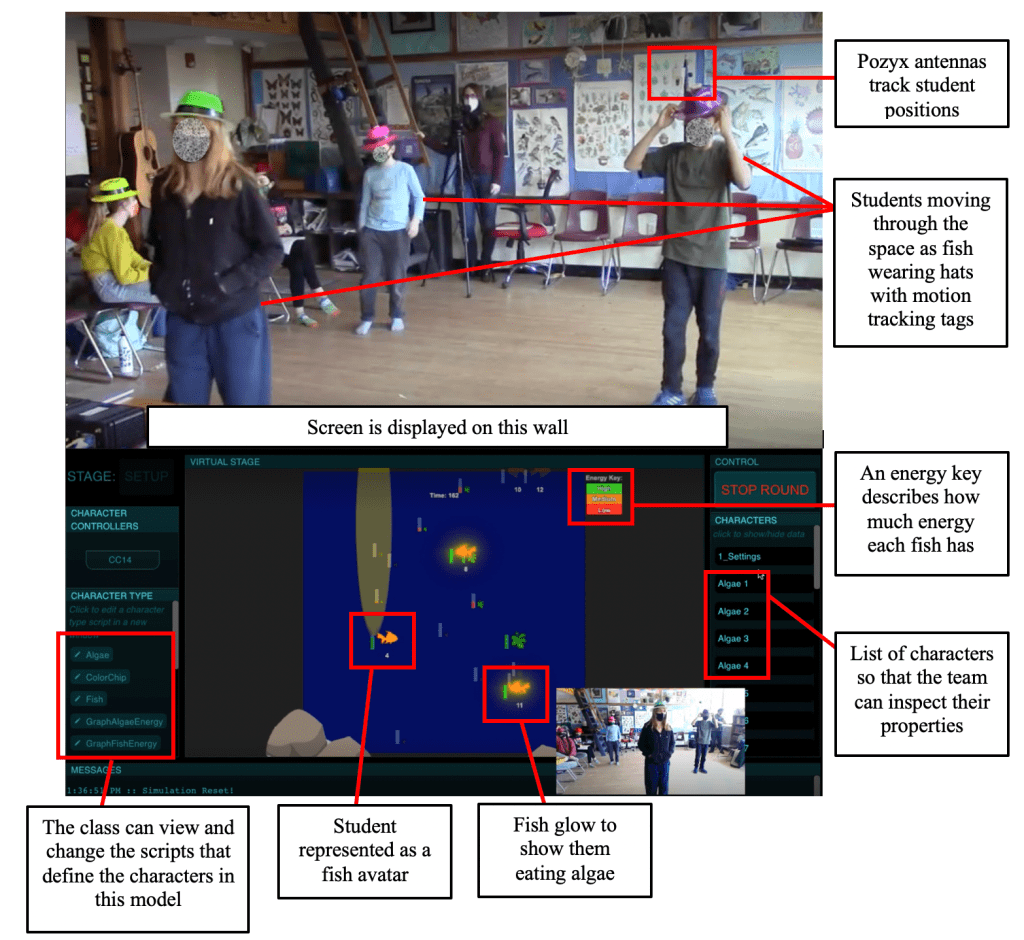
Check out our innovative GEM-STEP platform in action! The image in the slideshow shows students moving while learning about ecosystems. Kids wear special hats with tracking tags and pretend to be fish. As they move around the classroom, the GEM-STEP system tracks their movements and displays corresponding fish in a simulation that’s projected for everyone to see.
Through this interactive experience, students discover how fish depend on algae for survival, and how algae need sunlight to grow. Our research (Danish et al., 2020) shows that this combination of physical movement and teamwork creates a powerful learning environment where students understand complex concepts by literally moving through them.
My role
project Manager
lead curriculum Developer
lead classroom teacher
data collection
data analysis
nsf report and evaluation
publications
Proposal Development
In this project, I managed the full project lifecycle of the development of the platform leading cross-functional team coordination of workflows and ensuring methodological rigor that resulted in several publications and ongoing proposal development.
Theoretical grounding
Three major theories guided the design and analysis of this work.
Embodied cognition: Our thinking is shaped by our physical and sensory experiences (Barsalou, 2008)
Imaginary play: allows young children to externalize their intuitive understanding of scientific ideas by following complex rule sets, mirroring how science is governed by laws and rules. (Vygotsky, 1978; Enyedy et al., 2014)
Cultural Historical Activity Theory: Human activity is goal directed and culturally mediated (Kaptelinin, 2007)
Research Questions
The the following questions were part of a study I presented at the Annual Conference of th the American Educational Research Association in 2024.
After experiencing an 9 day science unit on ecosystems using the GEMSTEP platform:
What were the shifts in students’ conceptual understanding of ecosystems models and metamodeling knowledge?
In what ways did the embodied, code-based, and diagrammatic modes of modeling in the classroom support students’ sensemaking of ecosystems?
Data Collected
In Fall 2022, we implemented the fourth iteration iteration of GEMSTEP in one fifth-grade classroom at a rural public school in the Midwest.
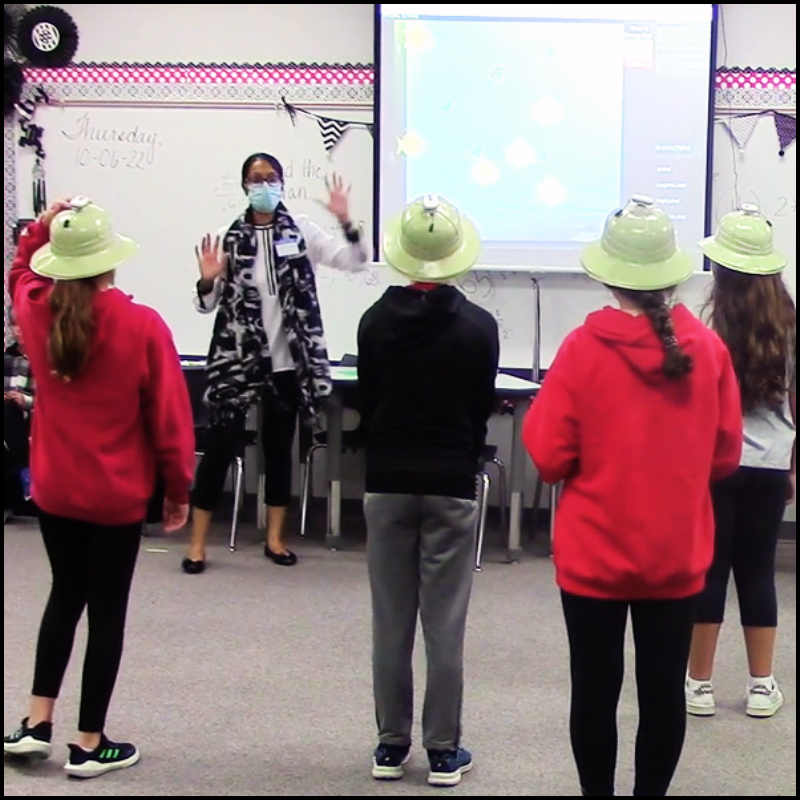
I designed and taught a 9 day science unit about ecosystems in which 21 students from the classroom participated in the study (5 declined to be recorded)
Over 9 days of 45-minute lessons students spent 20 minutes per day using GEM:STEP Platformin groups of 4-5 with instructional facilitation rest of the time. For details about the instructional approach, please read my instruction page.
Classroom video
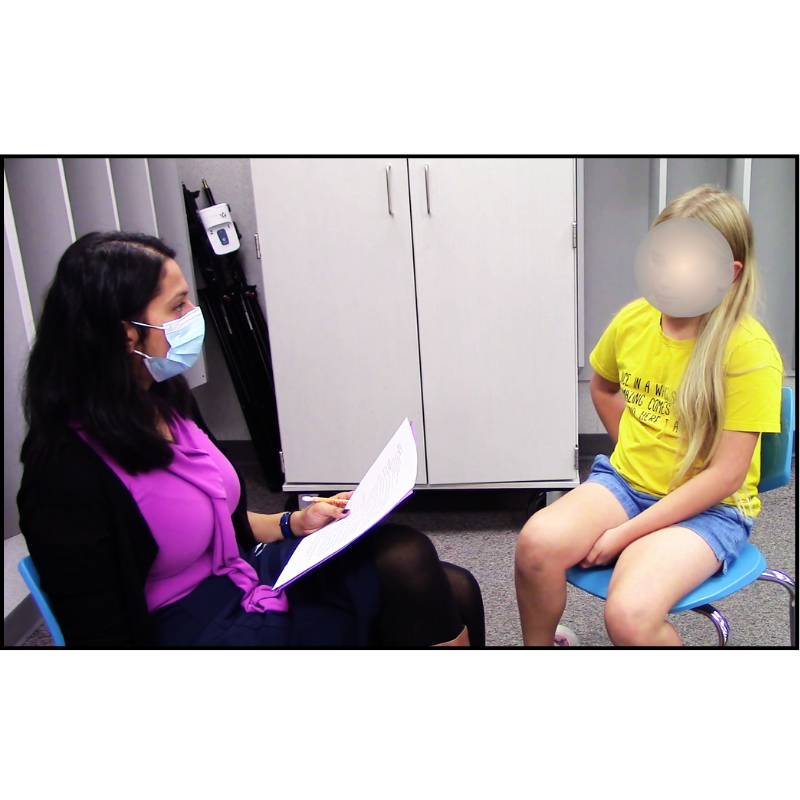
Interviews
Mixed Methods Analysis
My comprehensive research approach combined multiple data sources to provide rich insights into student learning. We collected and analyzed classroom videos, interviews, and written assessments
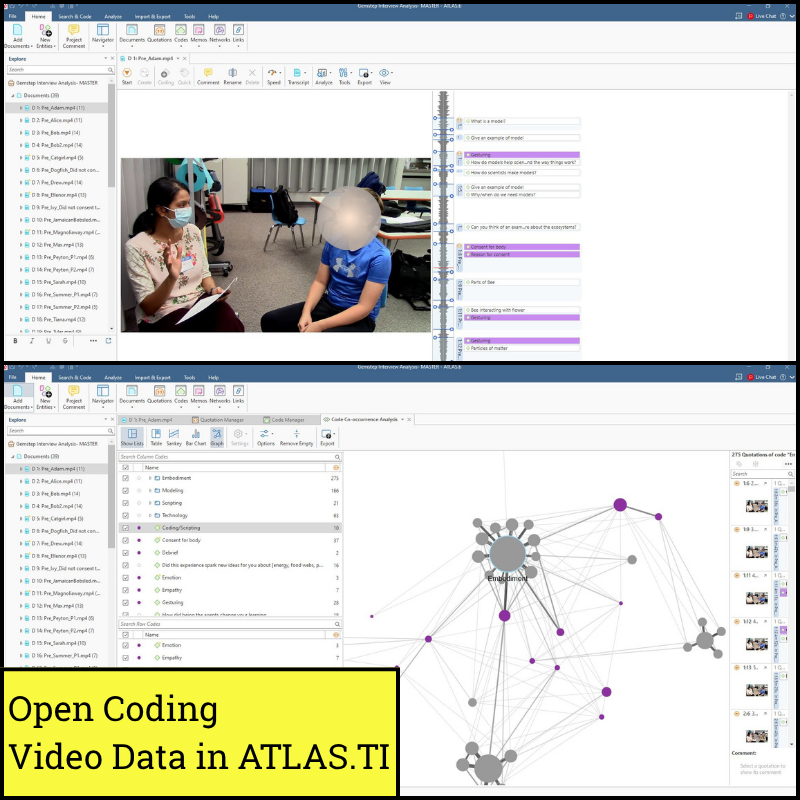
Using qualitative data analysis software (Atlas.ti), I carefully examined how students engagd in scientific modeling practices. I also analyzed interviews to understand students’ perceptions about scientific models.
To ensure accuracy, our team used a rigorous assessment process. Another researcher and I independently evaluated student work, achieving over 80% agreement in our initial analysis before collaborating to reach complete consensus.
Video Analysis
Artefact Analysis
Findings
Students conceptual understanding of ecosystems greatly improved in all coding categories
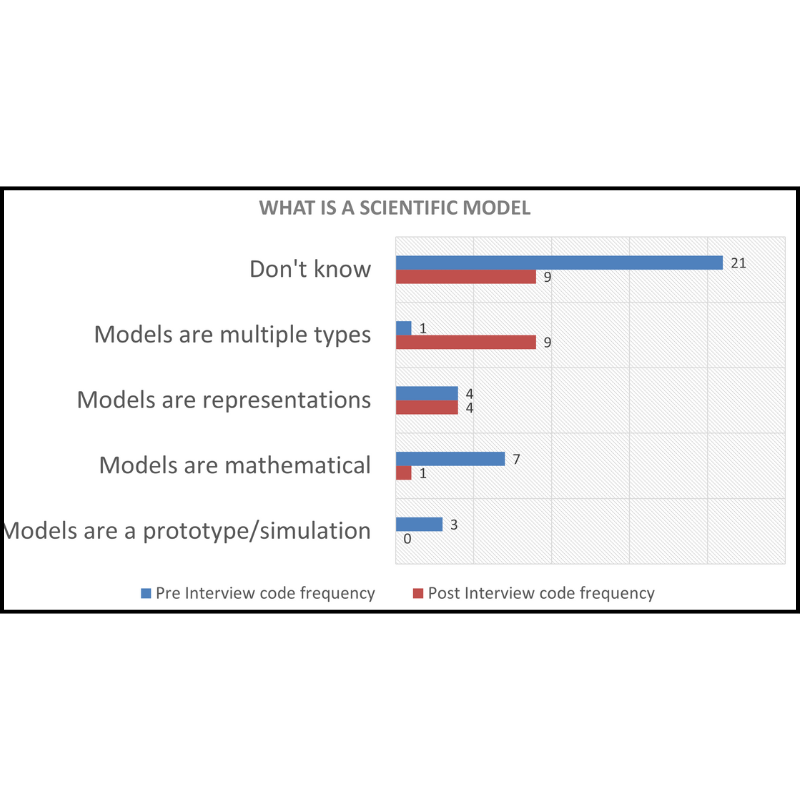
Changes in their knowledge about scientific models
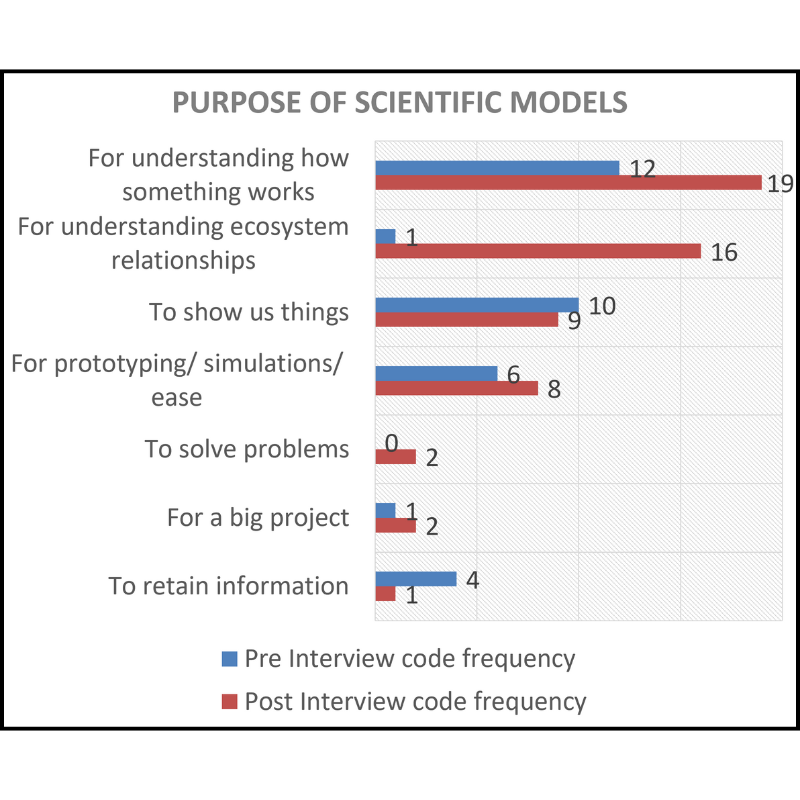
From before and after the interview, students’ understanding of the nature scientific models and practice moved toward scientifically accepted notions of modeling. Scroll through the slideshow to see changes across different modeling characteristics.
The power of blending modalities in learning
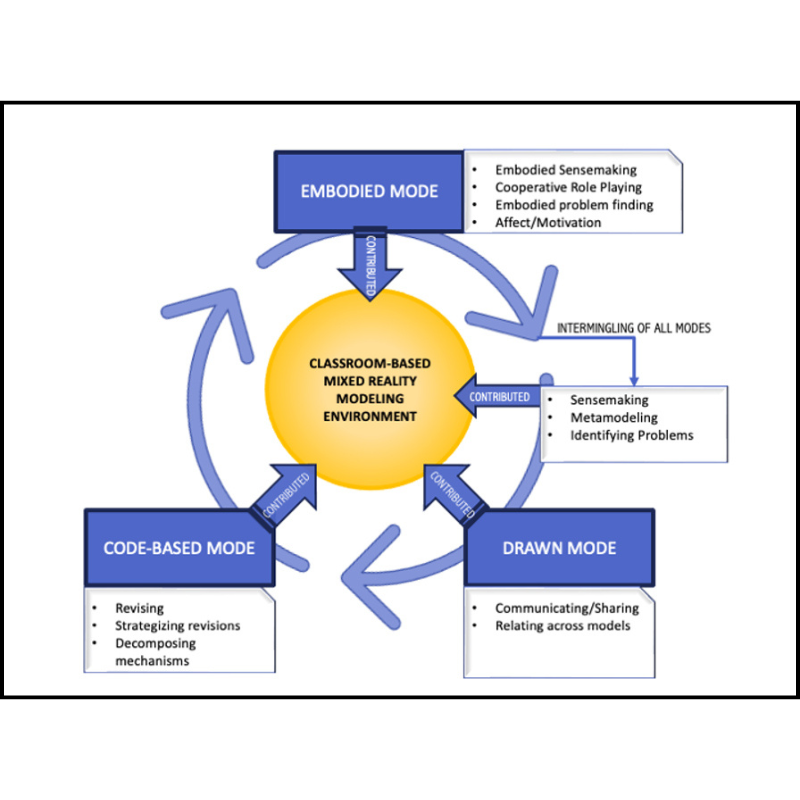
Video analysis showd that the blend of the visual, embodied, and code -based modes to represent different aspects of the scientific model facilitated students’ ability to create sophisticated models. The framework outlines the different features of modeling that the modes supported.
Key takeaways
Whole-Body Learning Enhances STEM Education
Research shows that incorporating physical movement into STEM education creates richer learning experiences. When students engage with concepts using their entire bodies, they develop multiple pathways to understand complex ideas.
Strategic Multi-Modal Design Principles
Effective educational platforms aren’t just about offering different ways to learn—they’re about creating complementary experiences that enhance each other. These multiple modalities work together to deepen understanding rather than simply repeating the same information.
Honoring Student Autonomy and Dignity
The most effective movement-based learning respects student choice. Rather than controlling how students move, we design platforms that encourage self-motivated exploration. This approach honors each child’s autonomy while ensuring everyone can meaningfully participate through various engagement options—moving beyond basic accessibility to true inclusivity.